
Targeted relief, tailored to your pain.
Sycamore Hills Pharmacy compounds customized topical and non-opioid pain formulations — delivering active ingredients where they are needed most, in the strength and combination your prescriber chooses.
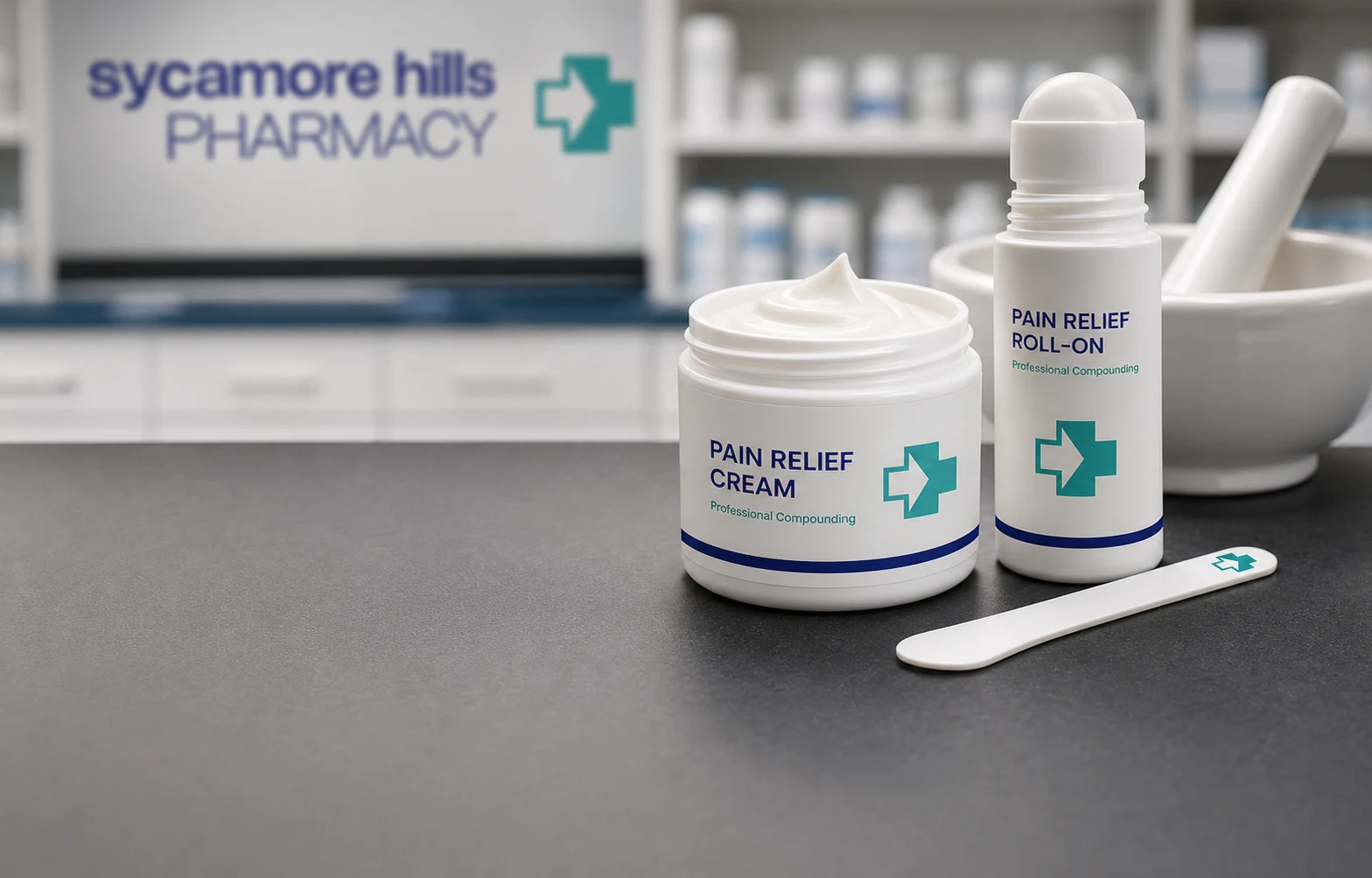
Compounded relief matched to the kind of pain
Different pain has different drivers. Explore the categories below — your prescriber can tailor a formulation to the source of your discomfort.
Joint Pain
Aches in knees, shoulders, hips, or wrists. Anti-inflammatory topicals can be applied directly over the affected joint.

Nerve Pain
Burning, tingling, or shooting sensations from neuropathy. Combination topicals may target nerve-related discomfort locally.

Muscle Pain
Strains, spasms, and overuse soreness. Muscle-relaxant and analgesic blends can help ease tight, aching tissue.

Arthritis
Chronic joint stiffness and inflammation. Topical formulations let patients avoid or reduce reliance on oral pain relievers.

Post-Surgical
Localized discomfort during recovery. Non-opioid topicals can support comfort as part of a prescriber-directed plan.

Migraine
Recurring head and temple pain. Custom formulations offer alternatives when standard options fall short for a patient.
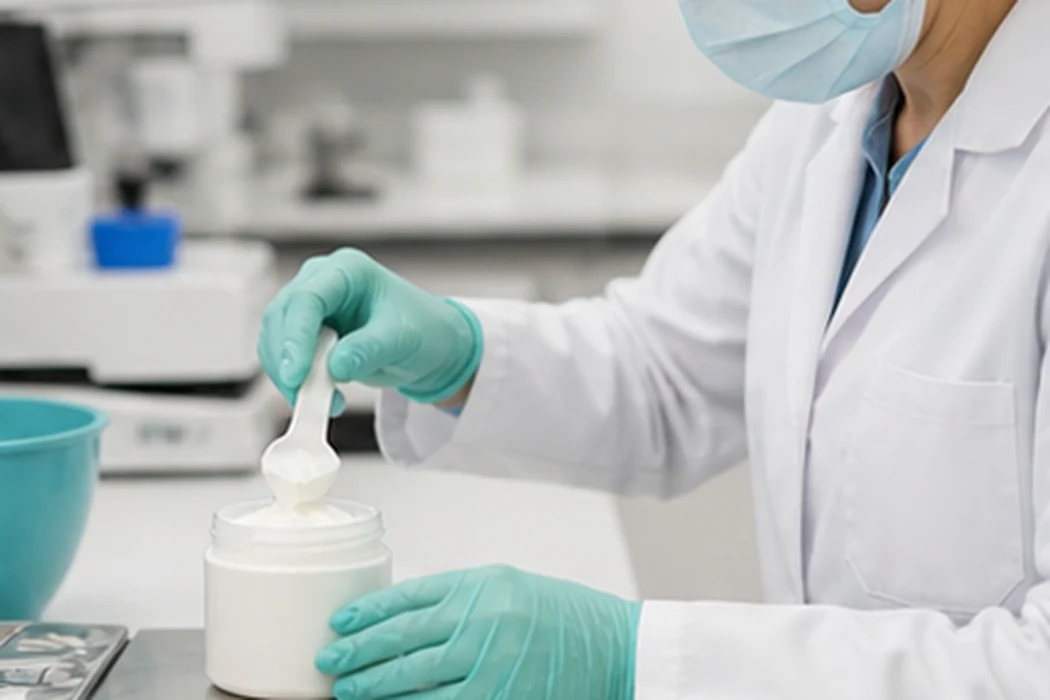
Relief you can apply right where it hurts
Topical pain compounding places active ingredients directly onto the affected area, which may reduce the amount of medication circulating through the body compared with some oral therapies. For many patients, this opens up non-opioid options that fit their treatment goals.
Site-Specific
Medication is applied over the painful area rather than taken system-wide.
Non-Opioid Options
Formulations built around non-opioid actives when appropriate.
Combination Blends
Several complementary actives combined into a single cream or gel.
Custom Strengths
Strengths and bases tailored to your prescriber's direction.
Ingredients your prescriber may combine
A general look at actives frequently used in topical pain formulations — always prepared to your prescription, never a fixed recipe.
Ingredient selection and strength are always determined by your prescriber. Ask our pharmacist team about a custom combination.
How a custom topical is made
From prescription to pickup, every formulation is prepared with precision and quality checks at each stage.
Prescription & Review
Your prescriber sends the order. Our pharmacists review the actives, strengths, and your history for compatibility.
›Select Actives & Base
We choose the appropriate delivery base and combine the prescribed ingredients for optimal feel and absorption.
›Precision Compounding
Ingredients are accurately measured and blended in our lab following strict compounding standards.
›Quality Check & Dispense
A final review confirms accuracy before your labeled formulation is packaged and ready for pickup or delivery.

Application tips for the best results
Start with clean, dry skin
Gently wash and dry the area before applying so the medication absorbs evenly.
Apply a thin, measured amount
Use only the amount your prescriber directs — more is not better with topicals.
Wash your hands after use
Wash thoroughly or use gloves to avoid transferring medication to eyes or others.
Store as labeled
Keep your formulation at the recommended temperature and out of reach of children.
Ready to explore a custom pain formulation?
Our pharmacist team is here to help you and your prescriber find the right compounded solution for your type of pain.
Frequently asked questions
What is compounded pain management, and how is it different from a standard prescription?
Compounding means we prepare a medication from scratch to match a specific prescription, rather than dispensing a mass-manufactured product. For pain, this often means combining several actives into a single topical at a custom strength your prescriber selects.
Are compounded topical pain formulations non-opioid?
Many are built around non-opioid ingredients such as anti-inflammatories, local anesthetics, and nerve-pain adjuncts. Your prescriber decides which actives are appropriate for your situation and treatment goals.
Why choose a topical instead of an oral pain medication?
Topicals are applied directly to the painful area, which may reduce the amount of medication circulating through the body. This can be a helpful option for patients seeking localized relief, though your prescriber will determine what is right for you.
Can you combine several active ingredients into one cream or gel?
Yes. Combining complementary actives into a single formulation is one of the most common pain management requests we fill, and it can simplify a patient's routine considerably.
How long does it take to prepare a compounded pain formulation?
Most pain compounds are ready within one to two business days of receiving a complete prescription. We will let you know if a specific formulation needs additional time.
How do I transfer a prescription or start a new one?
You or your prescriber can send a new prescription directly to our pharmacy, or use the Transfer a Prescription button to move an existing one over. Our team will confirm details before compounding begins.